

Ancient Bones 🦴 And Oberkrainer Secrets 🪗 On Gundula's Great Eurasian Roam 🎶🚐✨

Updated: Sep 20
For me, one of the most thrilling objectives of Gundula’s Great Eurasian Roam was the prospect of discovering exciting new local music 🎻. Although tempted, I had not done any YouTube research beforehand, and was rather curious to listen to traditional Slovenian music from this former Yugoslavian nation 🗺️. In every other Yugoslav region I had travelled through before, I could always hear traces of the old Tito-era folk style and Balkan Romani influences. 🎶
I had found an outdoor live event listed in Bled, on the lake neighbouring Bohinj, and set off on what turned out to be a rather adventurous public transport journey 🚐. Or rather, navigating the local connections and finding the right train was an expedition in its own right - though the carriage itself was amazingly modern, complete with power sockets and Wi-Fi 🔌. On a local commuter train, too—truly impressive!
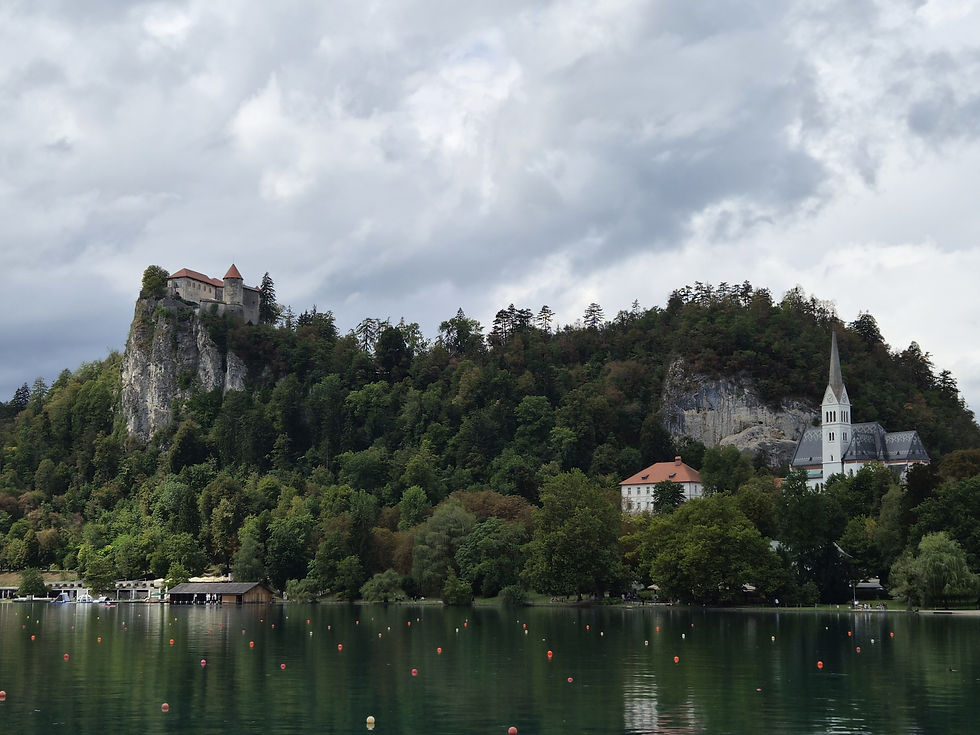
I arrived in a slightly rainy Bled, completed my thirty-minute walk to the lake promenade, and located the stage. A line-up of brass, accordion, guitar, and vocals looked promising. However, the sounds that unfolded were pure, unadulterated Bavarian Alpine folk sounds - the sort of music you might expect to hear echoing down a Bavarian or Austrian mountainside or beer festival, only sang with Slovenian lyrics. I was sooooo disappointed—not the tiniest bit of Balkan vibe in there. There was even some yodelling involved ! Hear for yourself what I captured:
I could simply not believe that there wouldn't be any music I liked from this otherwise so stunningly beautiful country. I should also mention that, in addition to the breath-taking nature, Slovenia is impeccably clean, remarkably well organised in most ways, and the drivers are exceptionally well-behaved! 🚗✨

Anyway, my curiosity was fully sparked regarding the history and reasons behind this style of folk music, so I turned to my trusted research companions Wiki and YouTube to dig a little deeper and gather some background knowledge 📚🔍
A little Peek into Slovenian Musical History 🎶
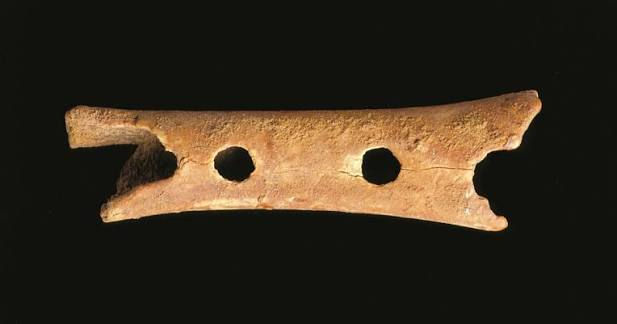
If you dig back far enough, Slovenia’s musical roots are actually mind-blowing. We are talking ancient history here! Way back in prehistory, someone carved a cave bear thigh bone into a wind instrument near Cerkno—now famously known as the Divje Babe flute. It is estimated to be a staggering 55,000 years old, making it officially the oldest known musical instrument in the entire world.
The 19th-Century Awakening: Polkas, Waltzes, and Accordions 🪗💃
Fast-forwarding a bit through the centuries, things really started to shift during the 1800s. Romantic folklorists, local composers, and clergy members suddenly got very busy systematically collecting and notating rural songs to keep local traditions alive.
It was during this era that Central European partner dances, especially the lively polka in 2/4 time and the waltz in 3/4 time took the countryside by storm. They blended right in with native melodies, paving the way for the ultimate icon of the genre: the diatonic button accordion! 🎶✨
The Oberkrainer Revolution: Bringing It All Together 🎺🪗
In the 1950s, the Avsenik brothers (Slavko and Vilko) did something revolutionary in the Gorenjska region: they invented the Oberkrainer sound—yes, you read correctly, it was not an Austrian Alpine style, it was a Slovenian invention, their new narodnozabavna (popular folk) that, due to its immense popularity, was later adopted into Austrian and Bavarian Alpine music. By pioneering that precise, infectious mix of diatonic accordion, clarinet, trumpet, baritone horn, and rhythm guitar, they created a brand-new blueprint.
Fun fact: Oberkrain is actually the old German geographic name for Gorenjska itself! Austria and Bavaria fell so completely under the spell of that sound that they eagerly adopted and multiplied the style—meaning that rather than Slovenian music sounding comfortably Bavarian, it is actually the other way around: This is why Bavarian and Austrian Alpine music sounds so Slovenian today!
This is an amazing twist: a musical style widely thought to be Austrian actually traces its roots right back to Slovenian soil. AND: The only Balkan influence I can occasionally see is the traditional style of dressing for the stage. 💃✨
Finding My Resonance: The Soulful Pannonian Plain 🎻🌾
And to finish with, I actually found one style of Slovenian music that truly captured my heart: The Pannonian Plain (Prekmurje & Eastern Styria). Heavily influenced by Hungarian, Croatian, and Slavic cross-currents, here you find melancholic modal melodies, free-rhythm storytelling, and unique folkloric textures. This is the only style where I discovered some truly beautiful songs for my own taste:
A Musical Postscript: Two Slovenian Surprises 🗺️🎶
To wrap up my journey: whilst Alpine folk isn't quite my cup of tea, I discovered a glorious historical plot twist. That iconic Oberkrainer sound isn't Austrian or Bavarian at all - it’s a Slovenian invention that my alpine neighbours simply adopted! And Slovenian's creative streak goes back 55,000 eons to boot, all the way to the Divje Babe flute, the oldest instrument on planet Earth. Who knew? 🦴🪗✨

Comments